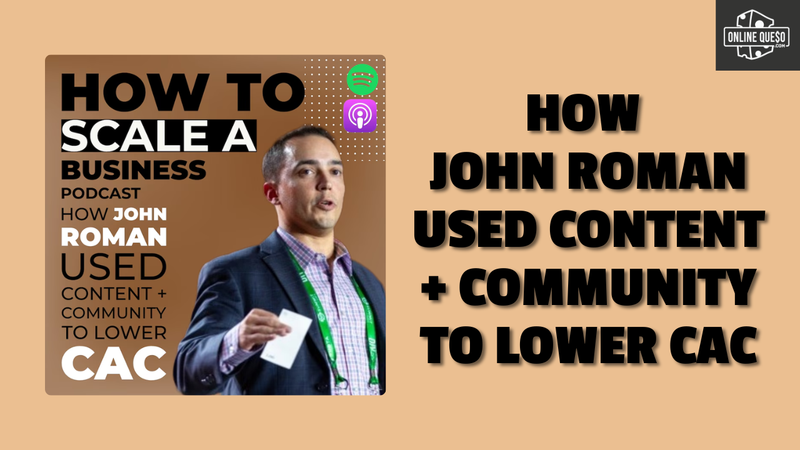
He walked away from a stable career to bet on ecommerce. And it paid off. John Roman, CEO of BattlBox, joins Arun Kirupa on the Checkout Podcast to talk about what it takes to scale an ecommerce brand beyond six figures and keep it growing from there.
John gets into the real decisions, the hard lessons, and the strategies behind one of the most recognized subscription ecommerce brands in the industry. In this episode, we explore:
- Why he left a stable career to go all in on ecommerce
- How BattlBox grew into a seven-figure subscription brand
- The AI marketing and retention strategies that drove growth
- What most ecommerce founders get wrong when trying to scale
- Lessons from the trenches that no course will teach you
Whether you are just starting out or already scaling, this conversation has something in it for you.
Transcript from video:
0:00 Thank you very much John. My name is Arun and welcome to our podcast. Today we're going to discuss about your experience and how you build your business especially BattlBox. I have lot of questions to ask. Maybe we can
0:13 start thinking about how you're working in AI space at this moment especially on the DTC and we can navigate our path through then personally about your company and about you. Thank you for first of all, thank you for spending
0:26 time with us and we're going to just talk about more more than not more than 45 minutes. So, let's jump in.
0:32 Let's do it. Well, Rubin, thank you so much for having me. I'm excited excited to be here today. Thank you. Thank you. So, I've been talking to a lot of entrepreneurs especially for in DTC world. The big a word right now is AI. So my first
0:44 question was I was thinking where are you actually running AI at this moment like how you're utilizing for your business and what is the future you are looking at in this AI space at this moment.
0:55 Sure. So so yeah everybody's talking about AI so much so that it's just it's a lot. I went to went to shop talk the one in Vegas in my opinion the the
1:06 only one in earlier this year and every every booth everybody was like AI this machine learning this so much so that it like starts becoming a little bit pro probably not the right usage of the word but a little AI slop
1:18 right it's a little bit much everybody's got a program so much of it isn't even real AI so we're using AI a lot right a lot I would say probably more than
1:30 than most. There's been a little bit of a journey with it on on figuring it out, but it's all it's none of it's customer facing for the most for the most part, right?
1:43 Okay. It's and it's not about when you talk about AI and the future of it when it comes to the workforce, there's kind of a line in the sand and and some of the people are on one side
1:54 of it and and some are on the other. And the side I'm on is it's not about job displacement. It's not about job elimination. Don't get me wrong, the the entry level position in in in in the corporate world
2:12 is to change, right? It's not the same as it is today because most of those activities or tasks that they're working on can be solved with automation, right? So I think it's all about enable
2:27 I think it's how do you give someone the the the tools with the tool being AI or some version or flavor of it the LLM and how do you enable them to have fix the
2:42 output that a normal person in that role would do. So that's kind of the lens that we've been measuring it the the entire time. So sure, initially because of all the hype, next
2:56 thing I knew I was spinning up a server and came up with a road map of these four autonomous agents we were going to build and it we were going to use open swap.
3:07 Yeah, it's it's really just about enablement. So when we when we started doing this, we fell into the hype of okay, autonomous agents and loaded a server up, put Auntu on it, put um the the open claw files and we were like
3:25 okay, let's do this. And we came with this road map to aggressively over a few weeks build about 40 autonomous agents for the organization. We did a lot of due diligence prior figuring out where they were going to go, what they were going to do, and getting into it. We realize one this is a lot a lot of work.
3:45 I wouldn't say I'm not technical but I'm not I'm not technical. I I I don't know how to code but with tools like cloud code I do right to a certain extent. Yes, I could get something working but it's probably not a product you want to
3:59 sell right and building the way people build via Vibe code. There's lots of infrastructure issues with that code, right? you have someone look at it that actually knows how to develop and it's
4:10 like this is it's like a spiderweb of fail points. So what we quickly realized was a lot of the things we were building did not necessarily need to be truly autonomous, right? They were they were
4:24 tasks. They were very straightforward things that that some people were doing in in the organization or that some people were not getting to, right? Because maybe it wasn't as high on the priority list as it should be. So we redid the whole whole strategy and so
4:41 now we have about 70 scheduled tasks. Some run maybe maybe 48 times in a day but 70 different scheduled tasks that we built. We build it all in in Anthropic and Claude that just run on their own. And it's really it was about taking
5:01 those those tasks that might be considered administrative, might be considered reporting, things that might need some critical thinking, but a lot that don't. You just follow the runbook, if you will, and it gets done, but it
5:13 takes time. So that's kind of where we attacked first was was how do we take these these arguably at times administrative tasks off of our team members plates to enable them to do the stuff that actually moves the needle or
5:27 they enjoy or produces revenue. And that was kind of the approach. So it's it's a constant process. We have some things we've built that are phenomenally amazing that we can't believe we didn't
5:40 have this prior to some simple things like stuff that's not even AI, right? Stuff we used AI to build Google Appcripts, right? And these scripts that run that they don't need an LM once they're built. But I'll be honest with
5:53 you, before Cloud, I didn't I didn't know what Google App Scripts even was until I started using it. And I was like, wait a second, this can just run without you. You can build it, but then it can run and it can send a web hook
6:06 via into Slack with a message and it can send an email and holy cow. So, so yeah, so it's a lot. Yeah. Yeah, that's awesome. For I think in future LLM, what I'm thinking about is a
6:21 lot of people building their own LLM machines or maybe an SLM for their own product and services. So that's something is becoming specialization for everybody for special e-commerce part.
6:33 Yeah, that's very interesting. Is there anything that you build it then after that you feel like it's not working and pull it back maybe saying okay let's cancel it. The reason I'm asking is recently lot of companies they they
6:45 eliminate the BPO services or the call center and they said we don't need because the WP or the AI solution is already there for customer support. the moment they launch it and after that they failed then they said oh my god
6:58 it's not working and they revert back to regular human resource which is using for phone solutions like that it's happening at this moment so did you try anything with an AI and after that it didn't work no so we're I know a lot of people think
7:12 that CS is the way to go and and we've been arguably kind of I don't want to say a lagger in that category but I think there is there's there's value in the human touch at least
7:23 currently where it's not it's not as displaceable as everyone might have you have you believe.
7:29 We we've definitely implemented some some AI tools that we pulled back on. So we had built this listening bot if you will that that was running every 15 minutes in specific Slack channels of ours and anybody could ask it anything.
7:46 on the next 15 minute run it would pull it check it against this this knowledge base these memory files that we had built for very internal as you were talking like our own OL it was just a a a library of MD files of knowledge of of the company so anybody in these certain
8:05 Slack channels could go and ask it a real quick question and get an answer but what we realized was first of all that's a lot for it to be running in multiple channels and checking like it's a a resourceheavy tool. It wasn't being
8:19 used. They never use it. Yeah. And and I thought it would be like, oh, everybody's going to interact and chat with it. And people weren't using it. People either either already had the answer or they were searching
8:31 their own local copy of chat GPT or or or Claude and or Gemini and and having the answers than there. So, there are a couple couple things like that where we thought this is going
8:42 to help and enable and it just wasn't. It either was wasn't wasn't the right tool or it just isn't the right tool right now. Right. Yeah, that's true. That's true. Perfect. That's awesome. Awesome.
8:54 Thanks, John. And I want to ask you something about especially in AI search engine optimization and how is this is helping. Do you see any differentiation at this moment? People are searching through chaptt and then they're landing
9:07 to your website and they're saying buying this product because this is something new. But I don't know any DTC companies or any agencies tracking at this moment or any any companies tracking. So do you see any
9:19 differentiation at this moment or Yeah. So we absolutely track it right. I think if you read the headlines at times the headlines can be a little bit misleading. People are like oh my gosh AEO has has has 10xed in the last 3
9:33 months. And you're like oh my gosh it's here. Yeah, but the the baseline that you're multiplying off is so low, it doesn't it's it's it's not meaningful yet. But right, we we we have a we have
9:44 a a a an agent that does a a morning report based on the the last 24 hours of traffic, the last seven days for comparative. And it's the great thing about J4 is it's telling you right if if the if the source is is is an LLM we out of all of them we do see and I think
10:07 this is pretty similar across the board for everyone in the in the maybe the the brand space is Chad GPT is the leader in that space. I think maybe 80 or 85% of our traffic that comes from SLMs do do come from chat GPT which I think is kind
10:24 of maybe a consumer behavior of some people are I would say that the more traditional consumer for a while because Chachi GBT was kind of the first to market for that positioning kind of
10:38 created a moat right then you got this this migration into all these people on the business side saying well cloud's better for business, ourselves included, and we were like, "Okay, well, we're going to start using cloud." But now you also see like a
10:51 shift as Chad GPT's latest models have been surprisingly really good. So when when I think about the traffic still isn't meaningful, are we seeing c are we seeing people hit our site because of our content or or just asking LLM? Absolutely. Are we seeing purchases from
11:09 that? Absolutely. But is it of meaningful size? No. I think it's one of those things everyone's like this is this is the future. Even Shopify came out and said it, right? Like everybody's
11:22 going to buy out of their LOM. I think we'll definitely see the continued trend towards it, but I think there's absolutely some products that you would buy through the LLM and there's other products you probably wouldn't. And I would think that if I'm
11:39 looking at what that chart looks like, the closer you are to a commodity, the more likely you're going to see the LOM revenue and success.
11:50 And yeah, I think there's probably definitely a a commonality between the closer to to to being a commodity.
11:57 Yeah, I think there's another one more thing going on right now. So it's Shopify is becoming headless commerce and then Shopify is integrating with OpenAI and also Gemini Google they are bringing something called universal commerce platforms. So it's it's becoming just a search engine and then
12:15 it's becoming a a agentic engine which you just put your numbers date and say how much you want to purchase what's the maximum price you can afford and the AI agent will do the negotiation part and
12:27 buy it for you which is cool. Yeah. So I just read that Google report yesterday. What is the future 2026 going to look like? So they just gave a realtime example saying in future if you
12:39 have a hoodie that you want to buy for $100, you can set up that saying okay maximum I can go $100 and then leave it like that. The AI going to check every day. The agent is going to check every day when they see that the hoodies are
12:52 available for $100. They're going to purchase it and send it to you. So in future I think that's the e-commerce going to look like and I believe that's the way to go. Yeah. I think I I I I have a couple personal agents that I have running everything and and one of them I'm a I'm a sports card collector and I have it
13:11 checking certain queries for certain price points and it alerts me if if it finds one and it's checking every day. So I absolutely believe that because I don't think I'm unique in in that use case that I've built.
13:24 Right. Yeah. Yeah, that's true. That's true. And also there's news coming on every Mastercard and Visa card, they're planning to have a personalized AI agents for that person. So they they look at their spending power and their spending patterns which is preventing the fraud protection and also they are preventing
13:42 it saying this is the person. So the credit card fraud is one of the biggest challenge for Mastercard and Visa. So they're bringing a personalized a agent which works with that that particular massacre and that see the patterns of
13:55 buying and your behavior and if something is goes wrong then they lock it and they alert it and also it can do a negotiation behalf of you too. Pretty cool. Yeah. Super cool. It's a super cool. So I'm just looking
14:08 at that and saying wow that's that's crazy. So imagine everybody's credit card have one Asian can communicate with each others and negotiate a deal, flight tickets, conscious service or anything
14:20 and just book everything through credit card. Yeah. When we get there, it'll be cool because that takes a lot of that stuff takes so much time. So much time. Yeah. Yeah. It's awesome. Yeah. Yeah. That's that's something I'm
14:32 excited about. Yeah. Let's let's quickly ask you another one more question. Okay. Do you have any recommendations or AI software tools that you use? I'm curious about that because you mentioned a lot of automation. So, anything that you
14:43 especially using every day. It's it's it's a little boring. I use I honestly use Claude the majority. I go I I've been going I previously was using Gemini for image image things
14:56 and then in the last couple weeks I've been going at the same time out of curiosity. Same prompt to Gemini. Same prompt to Chat GBT for image tweaks and chat GBT out of out of nowhere.
15:09 Yeah, dude. Chat GPT I'm blown away because I was a chat GBT guy and then I I switched sides and I have I have I'm starting to have FOMO because I don't spend enough time in there. I know I used Chach then I transfer everything from Chipity CL but I'm
15:27 thinking to go back to Chachib at least I have another subscription. There's no harm in having the other one more.
15:32 Yeah. The the problem is I've I built so many scheduled tasks and co-work. Yeah. Like I'm like I've cemented myself in there and I'm like right it's hard it's hard to migrate. I think Yeah, I know. I hear you. I think Chad GPT especially for image
15:50 generation and Cash 2.0 2.5 I believe that's is the best model for B generation. Yeah 100%. We can talk about this every day. There's a lot of Chinese open source model coming in. I I listen to a lot of things about it. But yeah, it's pretty crazy and exciting too. It's when I see this all man. Yeah,
16:08 it's crazy. Yeah, a lot of the Yeah, there's a couple of the the Chinese Loom the local that you can just put on a machine that is is tempting tempting to do too.
16:20 Yeah. No, but the reason is I I love I love the idea, but there's an also uh a risk in in LLMs like that. They can have they may be made basically it's like a sleeper cell. You could just put it inside once you start using it, it's going to start collecting and sending the data to anybody. But you never know.
16:40 So sometimes when the product is free the then the product and you can and you can say well I'm going to I'm going to I'm going to lock it in so it can't get out. But then you hear these stories about them getting
16:53 out and you're like what's going on? Yeah. Yeah. But it's a risk too because when as a as a consumer sometimes you think imagine next day Claude is coming and saying hey Arun you can't use Claude anymore. We are banning
17:05 you. You're stuck and then again you had to rebuild everything. So the agility or maybe the agile is not there. So maybe we have to balance both together which is open source plus the frontier models.
17:17 Yeah. Yeah. It's probably probably a combination. Cool. Cool. Perfect. Let's talk about your experience and current DTC ideas what you're doing and I know that just a good quick story. I believe you are co-founder and you built BattlBox and
17:35 then you sold the company right and then you came back and you bought it back again. Can you give me an example like what happened? Why you sold it and then you bought back? What it's a learning curve over there?
17:47 Yeah, that's not it's not your typical typical journey by any means. So come in in 2020. So we we're a little unique from a brand perspective that we focus more on content than most would. So we we our goal is basically to put out such
18:06 great content that it it brings the blended CC down. We don't get me wrong, we still advertise. We advertise a healthy amount, but for us it's more even though we're targeting new, a lot of it is truly middlefunnel. It's just the the platforms don't know that because
18:23 someone watching our Instagram video isn't doesn't hasn't been pixled, right?
18:29 So, we we we built this content engine. We we had a Netflix TV show in 2020 and there were three of us partner-wise, and we we saw a very nice uplift in 2020, both from COVID and then the Netflix show. So we hit a point where we
18:47 we didn't know how much how much further we could go and spoiler alert we could go further but we didn't know that at the time and there were three partners one of the partners was done wanted out it didn't make sense to buy him out we we agreed that we wanted a we as a team
19:05 would not take less than a 6x IDA it's tough as a as an individual to justify paying that when you're not even sure if you can grow the business
19:16 So we had to find a buyer. We wanted to find a strategic buyer that saw the vision same as us. We found one. It was a back out of out of Toronto emerge commerce and uh great great group
19:29 of guys led by Gassan Halazison and we we became a part of them and then to no no fault of their own. A lot of people know the story of this back in 21, right? Nothing changes in the business, but the market's being weird about it and market cap market cap drops. We saw an
19:49 opportunity to to find a a a beneficial to both party agreement. They they needed some cash and we wanted our baby back, right? So we we we we bought it back. We ended up buying it back in April 23. So yeah, reset, new focus, and for us, we
20:11 obviously were emotionally attached to the business to want it back, but it was also just a business decision. If I want to oversimplify it, it was it was a very very very straightforward arbitrage play. Uh we sold sold at the at the high at the top of the market and then we bought
20:28 at the low of the market. you can't time these things, but we got lucky and we were able to time it. Pure luck. But yeah, so it allowed us to sell, get the payday, and then buy it back and um
20:42 use the majority of someone else's money to purchase it, which is always nice. So, yeah. And then we're back back in the saddle and it's on to the next adventure.
20:53 Yeah. So, yeah, it's it's really challenging and I think I see that it's it's not only over here. I we work with a lot of aggregators too 25 million. It's always best to go with aggregators because of funding and the second is the
21:06 scaling up because they have the pretty good network and other things like that but not always all the company hit the success. It's very rare they run it for couple of years. If it was easy everybody would do it right. Yeah. Exactly. And I I I we scale couple of companies in in in tooth whitening
21:25 and in in the same scale of dental and hygiene product up to 20 and aggregate about it and they running probably like 6 months and they said oh no we are not running we have to shut it down and that happens most often rather than taking their brand to the next level. So yeah, it's one of the challenge I believe when
21:44 when they're scaling the companies, aggregators also wants to know the the mission vision and how it's going and how we can get this from from A to B, right? It's another one more challenge I believe. Yeah. Yeah.
21:55 Absolutely. Awesome. Let's talk about some metrics. I really love to see because I I'm really love to see the data and the numbers because what I believe is numbers don't lie and if you have the right datas on the right place
22:07 definitely you can have some good numbers or the the outcome. I've been watching a lot of founders and they always say especially in grooms you you know that they sold for almost like $1 billion.
22:18 Yeah. To to new company. So the the founders just saying I just only calculate one part which is lifetime value to cat. That's only one metrics I I look for but there are other lot of other metrics available. Right. A lot of others but that is an important one.
22:34 But yeah there's there's a a lot other ones too. Yeah. So, so can you talk to me um talk to me about a couple of other metrics that you really want to check every day or something is very important for you?
22:47 Yeah. So, credit where credit's due to to us CAC LTV and of course the CAC to LTV ratio is is paramount. It is something that we're looking at all the time. I would say in an equal place as that though. So if we have two if we have if you can have two north stars if that's possible
23:06 that's one of them. The other the other one is churn or retention depending on which which side of the coin you want to be on because this isn't a novel idea. I'm probably the 80 billionth person to say
23:20 this but it's a lot easier to keep a customer than to get a new one. And I think we have as a whole the DTOC ecosystem kind of really has way too much focus attention on acquisition acquisition acquisition acquisition when if you can put an equal a focus on
23:40 retention that makes the growth even better right like and I think it's better if you're focused on some effort on retention too it's better for the brand it forces you to listen to your customers it forces forces you to to shape and change and tweak the the brand
24:01 in a way that it needs to probably be to be more sustainable, right? Um so yeah, so the retention or looking at 30-day churn that that ecosphere is where I think that's that's our second northstar and and sometimes it's it is our one northstar.
24:20 Right. Right. Perfect. And this is something I'm I I love to ask all the founders because the you have more experience in DTC right now. If you take a look at 2027 2028, what is the most of the ecom owners or DTC owners thinking
24:37 it's right, but it's it's you are thinking it's wrong. So they with so for example, okay, no, I got it. I got it. So for the next two years, what is everybody? That's a good one. I would say, and I
24:49 have a a a buddy that if he hears this, he's going to be very upset with me, but I think everyone's a little bit too bullish on TikTok shop. Mhm. Don't get me wrong, we're on TikTok shop. We've put up some phenomenal numbers on Tik Tok shop, but it's there's there's been some
25:07 algorithm changes through through through time that have made it a a little a little bit difficult to be to be a a very viable channel. And the critics to what I'm saying would push back and be like, "Oh, well, it doesn't need to be profitable because of the
25:26 halo effect." Mhm. And I would argue that that's partially true. I think I think the halo effect for most brands is not as great as you might hear it be said to be. I think it absolutely exists. We've had videos go
25:44 viral just the video before TikTok Shop on TikTok and you see our Amazon sales for that product shoot up undeniable 100% halo effect. Um, but halo effect isn't like a onesizefitit
25:58 all right for for product type and product category. I think it's a wide array of variables and variety of of when it makes sense. They made let's look at the big players Meta or Apploving. You're spending dollars to show your your
26:19 product, right? You might have a strong intro offer. You probably do. It might be a discount off the first purchase or or get get X for Y. And those are kind of the two main mathematical
26:34 points. Call it A and B in this equation. And that's that's pretty much it, right? You're then you're then in, you've got the sale, look at the discount, look at how much you paid on on the platform,
26:46 and you're kind of done. But with TikTok Shop and maybe it's because of the way it's been built, but it's a lot, right? So in order for something to be successful on TikTok Shop, the product has to be
26:59 discounted. The product has to have free shipping, right? So those are two variables already where we're asking for more than the other platforms in the offer. Yeah, the way the algorithm has shifted, it treats a a influencer or affiliate with
27:18 less with with lower quality content better than an organic brand because they're trying to boost up that ecosystem, right? Right. Of of creators being able to have a very
27:32 easy path towards monetization. So, you're then having to pay 15 20% of the transaction to to this affiliate. So, now you you've added free shipping, discounted product, you've got to pay you've got to pay an affiliate. Oh, you have to play a pay a platform
27:52 fee obviously. So, that another six points I believe. Yeah. So it starts adding up and and that's how those are the four variables for a bit and it was still very viable and could
28:06 be ran profitably by most brands if they were executing it right. But then latest algorithm change happens and now unless you're putting ad dollars behind it, the algorithm is just not going to like
28:19 it that much. Yeah. So, we take a a product that that we have pretty good margins on and all of a sudden after the dust settles, it's got to be like a 3.2 3.3x return on ad spin just to not lose
28:37 money. And then we have a rule where we don't we don't run channels that the that the contribution margin is less than 20% on. It's we we try to steer clear of that. And if we want to have a 20% contribution margin on TikTok shop,
28:54 we've got to hit a 7x return on ad spend. Yeah, that's not sustainable. It's not it's not for us at least. If someone's getting 7x return on ad spend, right? Good for them. They are they have a great product and a an amazing vi ad buying team. It's just it becomes very very difficult and I
29:13 think everybody's so bullish about it. I think there's better better alternative options out. Yeah, that's true. Very. It's very true, John. Because the reason I'm I'm saying I've been working with a lot of other
29:24 agency and also we work with brands too. So is the halo effect is not that much. Honestly, they think at least Tik Tok is getting most of the traffic and we'll buy from Amazon for next shipping and
29:37 other things like that. But comparing to the amount of money they're spending and the amount of sales that they're getting on Amazon or any other platform, it's very small. And and I see a lot of brands, they do seedings like 10,000
29:50 product. They just ship the product for so much. That's another another line item I left out. Yes. That person that's selling it, you also sent them the product, correct? So seeding product usually you
30:03 have to send at least 100 and probably 20% of them turn out to be they'll do the video or maybe influencers are doing the video right the take rate is so low you send out so much stuff and then they ghost you
30:16 or they don't do a video where the video is just horrible right yeah so that's another one more channel so yeah definitely I I'm I'm thinking about that but for brands starting they
30:28 might test it but again unless if they don't have a good margin definitely it's going to be tough. It's tough. So I think I think another two of the challenges we see on that channel versus other channels and again
30:41 I'm saying all this stuff but we're still on there right? So like it it is what it is but AOV average order value on that channel is typically very weak comparative to any other
30:54 channel. It's it it functions for us around 25% of average. So like for us AOV on our sites north of 80 it's it's like $19 on TikTok
31:06 In TikTok Shop average order value is 19. The reason is because the users are very young and disposable income for them it's less than less. So maximum product you can sell it's $ 20 $30 maximum. There's no premium product available in TikTok. So, and also when
31:23 I I actually read this article, the TikTok users are most impulsive, which means they see the ads, just go crazy and just buy it. So, it's just an immediate gratification purchase. It's not like $20 is can accomplish that
31:37 very, very easy because credit where credit's due. I still believe this. Out of all the algorithms on social platforms, TikTok is the best. Yeah. They they they they were the the first to have this super advance. They know when to stop the brain rot and show you
31:55 the the the perfect $20 to buy. They know so well when to show it to you, right? So, credit is where credit is due. They great algorithm, right? Phenomenal.
32:06 Yeah, that's a I think one maybe I I believe if sometimes the brands not using the live video or live sales session, maybe that's something is picking up. I maybe next two years it
32:19 might be one of worth exploring. That's what I'm seeing over here. So we're so that's that's our number one growing channel right now is live live shopping. Yeah. We launched it in April of last
32:31 year on whatnot and it's it became our our number two sales channel in less than a year which is crazy because obviously number one's our website but we had a strong we have a strong Amazon business that was our number two and whatnot live shopping shot right past it
32:50 right yeah because the last year I actually went to fair in China this huge it's it's a different I've always market. Yeah. Oh, yeah. That's that's awesome. I I highly recommend to go there and see the
33:03 different market. It's different. The way I can say something like how the North American have interpreted China is different than when you go there. It's entirely different. The technology, the amount of production, people, and how advanced they are. I mostly say I would
33:20 say like China's 20 years ahead of Canada right now. Honestly speaking, because I've been living here for more than 15 years and I just went there and I saw that and I see like, oh my god, it's almost like 15 20 years ahead of
33:31 Canada. So they're so advanced and e-commerce especially, they're killing it right now. And you can see that on Amazon too more 80% sellers are Chinese sellers in Amazon too. So yeah,
33:44 you can you can you can take a look at it. So yeah, it's actually that particular DTC especially Amazon market or on TikTok market is is pretty good. They know the game especially live.
33:56 Absolutely. And what they are doing right now I read this article they made an AI person who can run live video like a real person. It's like two person having communication like like us what we're doing like podcast and they start selling and they made almost like 1 million or something around that money. Yeah.
34:15 Yeah, cuz it was it was a well it was a very well-known person in that space and they it was an AI version of him. Got it. Got it. And they just they nobody either nobody knew or nobody cared.
34:27 Yeah. I don't know if we'll ever get to the same penetration because you could argue that China's on the live shopping is at least 10 years ahead of us and I don't know if we'll ever get because there's some obviously as as you've been there there's there's some cultural
34:41 differences and I don't know if if if North America will ever get to that level but we're going to get close. Live shopping is probably the most bullish thing I I I'm on. Right. Right. I think what I'm seeing
34:55 over here as a demographic. I'm I'm talking I I spoke with a lot of investors in China. They're saying next hit is going to be not here in North America or Europe market. It's already
35:08 done. They're seeing opportunity in India. They're seeing opportunity in South Africa. And the third opportunity they're looking at in China. So they're saying most people have more money comparing to European market or UK, US,
35:22 South Africa have more disposable income. They're learning and they are becoming an um what do you call developed country and they are willing to spend more and also Indian market is India especially on Indian market in DTC is it's underutilized and the third one is China. China, India and then South
35:40 African countries wow are spending no money. So yeah, that's what I'm seeing too because when you see the nationalities, people are coming and learning something new in the in the in the festival fairy North American but most of the other country continental people coming and exploring it. So it's different
35:59 experience over there. I I I highly recommend to go there. No, I I I I absolutely want to. Okay, perfect. Thank you for the time. We discussed a lot of things. I I know that you are very good in especially affiliate marketing. I have a lot of question but I do have very limited time. So before I finish my
36:18 conversation, how do you see your future 27 looks like? What is your future plan and and what you're planning to do goal and business goal? Yeah, so business business goal first.
36:32 We're we're at an interesting phase right now. We're seeing the most growth we've ever had. July was our best month ever in company history or this year will be our best year in company history. So everything's moving right
36:47 and right and up which is which is great to have it up to the up and to the right. We're exploring several things. Right. So we're we're launching this live live shopping channel channels and scaling that up. I did not think we'd go from zero to zero to 5 million run rate
37:07 in a year on a single channel, right? And now it's super easy to rinse and repeat. So really want to see where that goes. We're really focusing on inperson. So I I I believe as we'll become further and further on online and in the AI world in person is still underserviced
37:27 and but but not in the traditional way of inerson retail right we have battle games which is an event we do once a year we take sponsors vendors both both tech partners and like product vendors and customers and we have a competition and
37:44 and we give money away but probably leaning more into not necessarily a competition, but more more more in-person events. I think I think that's a big opportunity for us is is bringing people together in person because you and I can chat on through through our cameras like
38:06 we are now both. If we were both in the same room. Yeah. It's a different vibe. It's different. Yeah. Yeah. Yeah. Those are the two things. personal. I should probably have one, but I don't know. I have a I have a 2
38:18 and a halfyear-old that is my focus right now. And yeah, spending as my my personal goals is to spend as much time with him as possible. Please do that. Please do that because end of the day, we look at our days and we only remember the times that we spend with our family.
38:34 Yeah. So, yeah, definitely. It's depressing when you look at that. Yeah. Yes. Off. Thank you very much. Thanks for the time. First of all, I really appreciate that you're taking No, this was so much fun.
38:46 Okay, awesome. I am I I'm happy that you enjoyed the conversation. I love to have another one more call maybe couple of months later just to check it out what's going on. Let's do that a little bit longer because I love to chat a lot of
38:59 things. [laughter] Yeah, lot to chat about. Awesome. Thank you very much. Thanks for the time and see you. Take care. All right. Take care.